
 HR
HR EN
ENHere Is What Happens When a Child Steps Outside Traditional Schooling
- Category: School Education

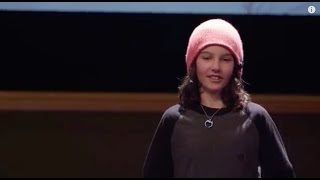
I believe most of us have by now watched, or at least heard, the talk that thirteen-year-old Logan LaPlante gave at TEDx in 2013. Logan left school, in fact the entire education system as we know it, in order to learn at home. Not only did he study at home; he also had the opportunity to design his own education so it could follow his interests and his personal style of learning.
Whether you agree with homeschooling or not, you must acknowledge that it offers something traditional schooling does not. As Logan points out in the video below, when he grows up he wants to be healthy and happy. Listen to how he explains, in his own words, that hacking his education helps him reach that goal.
Logan’s story closely mirrors that of Jacob Barnett. The school system placed him in a special education class until his parents took him out of the conventional track. He is now an extraordinarily gifted thinker who may one day earn a Nobel Prize.
Education and Homeschooling
We often regard education as the cornerstone for building a cohesive and protected society. Yet this belief frequently arises from the assumption that those who emerge from the system can endure the grind of a society pushing them to serve the profit and perpetual growth of large corporations. Rather than graduating creative people able to think beyond familiar boundaries, the prevailing approach produces compliant, obedient, well trained individuals who maintain the system they live in, a system already losing momentum.
Put simply, the standard model focuses less on each student’s growth and far more on producing worker bees who will act and operate WITHIN the constraints the system has imposed.
 During a TED talk in 2007, Sir Ken Robinson shared his conviction that today’s education suppresses creativity. His talk became one of the most viewed, inspiring many to rethink how we educate our children. As traditional education struggles to keep pace with the times and the needs of young people, many families are turning to homeschooling as an option that allows children to explore, much as Logan did.
In the United States, 3.8 percent of children aged 5 to 17 learn at home. In Canada, that figure is about 1 percent.
That share will almost certainly rise in both countries as more parents and children recognize the limits of the current system. It is particularly telling that homeschooled children often outperform their peers in both private and public schools.
As I see it, homeschooling more readily fosters creative, adaptable, forward-thinking individuals who are less conditioned by a constrained system that is also in decline. Is it right for everyone, and does it mean a student in a traditional school cannot be creative or adaptable? No. I simply feel the likelihood of achieving these qualities is often greater through homeschooling.
Many only discover the advantages of learning at home later in life, some not until university. Many feel boxed in by the system and sense that its methods will not lead them to their ultimate goal.
Whether they study economics, engineering, or music, they often do not enjoy the methods used by the institutions they attend. Setting aside what society pressures us to think, we can see that leaving formal education and a diploma behind can be a momentous decision.
Yet it is often at that moment that individuals gain the freedom to explore and learn anything, free from rigid structures that reward memorization and endless testing. I firmly believe we can be fine if we leave the current education system behind and choose other methods that suit us better.
I cannot say learning at home is the answer to everything, but I do believe that a drastic, and when I say drastic I mean DRASTIC, transformation of the entire approach to education is necessary, and very soon.
VIDEO
Related articles

