
 HR
HR EN
ENTwelve food additives to avoid, part two
- Category: Raw Food

It is hard to believe that propyl paraben, a compound known to act as an endocrine disruptor, is permitted in food. Even more surprising, it has been placed in the GRAS category, meaning Generally Recognized as Safe. Studies have shown that rats fed the maximum allowable dose of propyl paraben had reduced sperm counts. The same research observed lower testosterone levels in those rats as well (Oishi 2002).
1. Nitrates and nitrites
Have you ever wondered how cured meats such as salami and sausages keep that fresh pink hue for so long? They are often treated with nitrates or nitrites. These compounds are used to fix color, preserve freshness, and enhance flavor. While they can extend shelf life and improve appearance, they also present health risks.
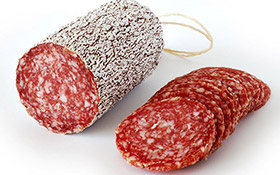
Nitrates and nitrites are used as preservatives in cured meats such as ham, salami, sausages, and hot dogs. Nitrites formed from nitrates react with amines, which occur naturally in meat proteins. This reaction can produce nitrosamines, which are well known carcinogens. Nitrosamines may form in meats treated with nitrates or nitrites, or later in the digestive tract.
There is substantial research supporting these concerns. A few examples include:
- Links between stomach or esophageal cancer and nitrites: IARC 2010, Rogers 1995, Mayne 2001
- Associations between brain and thyroid cancers and nitrites, although causality has not been established: Preston Martin 1996, Pogoda 2001, Aschebrook Kilfoy 2013, IARC 2010
One might note that some vegetables, for instance spinach and other leafy greens, also contain high levels of nitrates. Studies indicate that nitrates from these sources pose minimal cancer risk, and in many cases no measurable risk at all.
2. Potassium bromate
Potassium bromate is used to strengthen bread and cracker dough. It also helps dough rise during baking. It causes tumors at multiple sites in animals, is toxic to the kidneys, and can damage DNA (IARC 1999). During baking most of it converts to potassium bromide, which is not carcinogenic. Yet research conducted in the United Kingdom found that measurable residues of bromate can remain in bread after baking. The levels were small, although still significant (Ministry of Agriculture, Fisheries and Food 1993).

The United Kingdom and Canada prohibit the use of potassium bromate in food. It is also not permitted in the European Union. In the United States it remains legal to add it to flour.
3. Propyl paraben
It is hard to accept that propyl paraben, a compound known to disrupt the endocrine system, is allowed in food. Even more troubling, it is classified as GRAS, that is, Generally Recognized as Safe. Research shows that rats fed the maximum permitted dose of propyl paraben had reduced sperm counts. The same study recorded lower testosterone levels in those animals (Oishi 2002).

This compound acts as a weak synthetic estrogen (Routledge 1998, Kim 2011, Voi 2011). It can alter gene expression, including in breast cancer cells (Terasaka 2006, Wróbel 2014). Propyl paraben accelerates the growth of breast cancer cells (Okubo 2001). In addition, recent research from the Harvard School of Public Health linked propyl paraben to reduced fertility in women (Smith 2013).
Propyl paraben is used as a preservative in tortillas, muffins, and food colorings. People are exposed through foods that contain it, as well as through occupational contact in food processing and packaging. Testing of samples collected from 2008 to 2012 found propyl paraben in more than half, including beverages, dairy products, meats, and vegetables (Liao 2013).
4. Butylated hydroxyanisole (BHA)
This preservative is listed as GRAS, meaning Generally Recognized as Safe, although the U.S. National Toxicology Program classifies it as reasonably anticipated to be a human carcinogen. There is evidence that BHA causes tumors in animals, although debate continues over how relevant these findings are to humans.
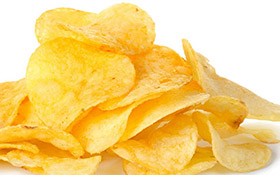
The European Union classifies BHA as an endocrine disruptor. At higher doses it can reduce testosterone and the thyroid hormone thyroxine, and it can impair sperm quality and reproductive organs in rats (Jeong 2005). One study found that female rats given lower doses had reduced uterine weight, a possible sign of estrogenic activity (Kang 2005, Zhu 1997). Other studies reported impaired development and increased mortality in nursing pups, as well as behavioral effects after weaning (EFSA 2011a, Vorhees 1981a).
Many foods contain BHA, including chips and canned meats. It is added to fats and to foods that contain fat, and it is an approved preservative in flavorings.
5. Butylated hydroxytoluene (BHT)
Butylated hydroxytoluene is chemically similar to BHA. Like BHA, BHT appears on the GRAS list and is used as a preservative in foods. The two compounds act synergistically and are frequently used together.
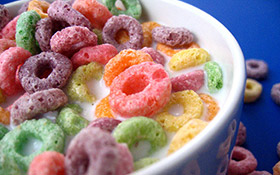
BHT is not formally listed as a human carcinogen, yet some studies have linked it to cancer in animals. Rats that consumed BHT developed tumors in the lungs and liver (EFSA 2012). It also causes developmental effects and alters the thyroid in animals, which indicates endocrine disrupting activity (EFSA 2012).
6. Propyl gallate
Propyl gallate is used as a preservative in products that contain edible fats, for example sausages and lard. It appears on the GRAS list, although the U.S. National Toxicology Program reported associations between exposure and tumors in male rats, as well as rare brain tumors in two female rats (NTP 1982). These findings do not establish a direct causal link, yet they raise an important question about whether the compound can be considered safe. The European Food Safety Authority concluded that available studies on reproductive effects are outdated and limited in scope.

Data on potential endocrine activity remain incomplete, since some results suggest possible estrogenic effects (EFSA 2014, Amadasi 2009, ter Veld 2006).
7. Theobromine
In 2010 Theocorp Holding Co. asked the U.S. FDA to place theobromine on the GRAS list. Theobromine is an alkaloid found in chocolate that acts in a way similar to caffeine. It could therefore be used in a wide range of foods, including bread, cereals, and sports drinks. Scientists questioned the rationale for the request because the company did not adequately address findings related to reproductive and developmental effects. Theocorp withdrew its petition. Theobromine was later placed on the GRAS list for products outside FDA jurisdiction (NRDC 2014).
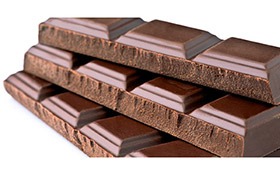
This compound illustrates a gray area within GRAS classification. Food companies are allowed to self designate substances as GRAS without consulting the FDA. They rely instead on private expert panels. In many cases even the agency does not know how particular additives have been placed on the list it oversees. The agency is also often unable to review the underlying data or to reassess whether those substances are truly safe for use in food (NRDC 2014).
8. Unknown flavor ingredients
The term natural flavor now appears on more than twenty thousand food products. Artificial flavors also show up on roughly one in seven ingredient labels.
What do these terms actually mean? It is an important question.
The truth is that when you see the word flavor on a label, you have no way of knowing which specific chemicals were added to the product. For people with allergies or those following restricted diets, this lack of transparency can be a serious problem.
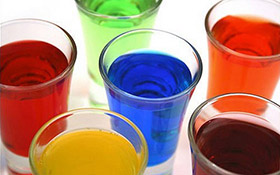
Beyond the flavoring chemicals themselves, these blends often include natural or artificial emulsifiers, solvents, and preservatives. These are known as incidental additives, and manufacturers are not required to list them on the finished product label. Flavor blends are complex and may contain more than one hundred different substances. Non flavoring chemicals with other functions often account for eighty to ninety percent of the blend.
Shoppers may be surprised to learn that so called natural flavors can include synthetic chemicals such as the solvent propylene glycol or the preservative BHA. Flavor extracts and ingredients derived from GMO crops can also be labeled natural. That is because regulators have never precisely defined the term. Certified organic natural flavors must meet stricter standards that prohibit synthetic and GMO ingredients.
Companies that produce flavor blends are often the same firms that create fragrances for perfumes and cosmetics. There is concern that processed food manufacturers manipulate added flavors to stimulate cravings for unhealthy foods, which can encourage overeating.
9. Artificial colors
Artificial colors are often used to make products with little nutritional value appear more appealing. Questions have been raised about the safety of several FD&C synthetic dyes used in foods, drugs, and cosmetics.
Caramel colors III and IV can be contaminated with 4 methylimidazole, or 4 MEI, which causes tumors in animal studies (NTP 2004). Similar concerns have been raised about contamination with furan, which has also been linked to cancer (EFSA 2011b).
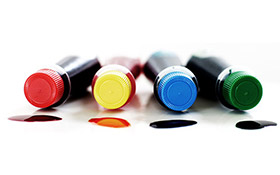
The debate over how FD&C dyes affect children’s behavior continues. Some studies suggest that mixtures of synthetic dyes with the preservative sodium benzoate are associated with hyperactivity (Bateman 2004, McCann 2007). EFSA concluded that such dye mixtures may have a small but statistically significant impact on activity and attention in children (EFSA 2008a).
Avoiding artificial colors such as caramel III and IV can be challenging. Current rules allow manufacturers to list the ingredient simply as artificial color when it appears on the approved list of additives.
10. Diacetyl
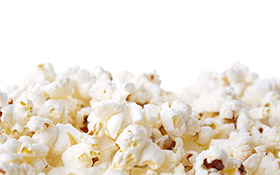
Concerns about food additives do not affect only consumers. Some additives also pose risks to workers who handle them. Diacetyl, used to impart buttery flavor to microwave popcorn, has been associated with a severe and irreversible respiratory condition known as bronchiolitis obliterans. The condition leads to inflammation and permanent damage to the airways. Diacetyl is also used to flavor dairy foods, for example yogurt and cheese, and appears in fruit flavors such as strawberry and raspberry.
11. Phosphates
Phosphates are among the most common food additives and are present in more than twenty thousand products. They are used to leaven baked goods, reduce acidity, retain moisture, and tenderize meat. They often appear in less healthy options such as fast food. In people with chronic kidney disease, elevated phosphate levels are linked to cardiovascular disease and mortality (Ritz 2012).
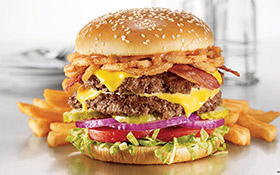
One study found that even in people without kidney disease, diets high in phosphorus were associated with a higher risk of cardiovascular disease (Dhingra 2007). A cohort of three thousand individuals followed for fifteen years showed a relationship between dietary phosphorus and heart disease, and another study reported similar findings (Foley 2009, Cancela 2012). Debate continues about the strength of the link between phosphates and health outcomes, and more data are clearly needed.
12. Additives that contain aluminum
Aluminum is the most common metal in the earth’s crust. It can occur naturally in food, although most human exposure comes from food additives that contain it (EFSA 2008b). Aluminum can accumulate and persist in the body, primarily in bone. Additives that contain aluminum, such as sodium aluminum phosphate and sodium aluminum sulfate, are used as stabilizers in many processed foods.

Animals exposed to aluminum in utero during development show neurological effects such as changes in behavior, learning, and motor function. Neurotoxicity has also been reported in people receiving dialysis when inadequately purified water was inadvertently administered intravenously.
Which brings us back to the essential question. What should you choose to eat? My advice is simple.
Read labels carefully and make considered choices. If you find any of these twelve additives on an ingredient list, leave the product on the shelf and move on without hesitation. Your health matters, as does the wellbeing of those at home if you shop for the family.


